
Overlap Siding Profiles
Designed to shed water and create deep shadow lines, overlap profiles are the standard for exterior siding. Unlike Tongue & Groove, these boards stack or lap over one another, allowing for gravity to keep moisture out of the wall assembly.
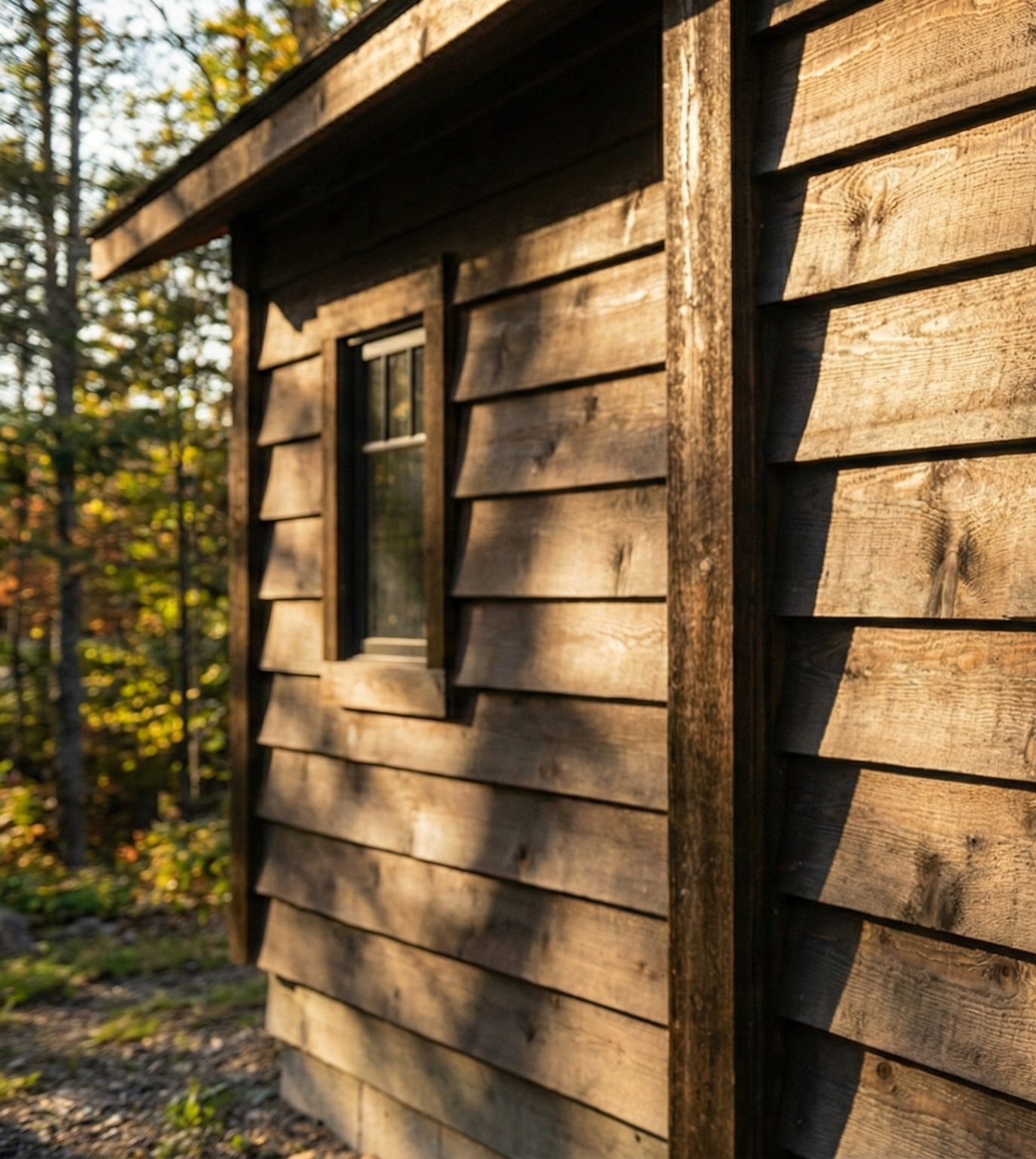
Channel Rustic
The Mountain Standard.
This profile features a rabbeted edge that creates a wide, recessed “channel” (typically 1/2″ to 1″) between boards when they overlap. It creates a bold, rugged shadow line that defines the “Cabin” look.
Texture Note: We typically offer this in a Rough Face texture (S1S2E) to enhance the rustic aesthetic and hold stain better than smooth wood.
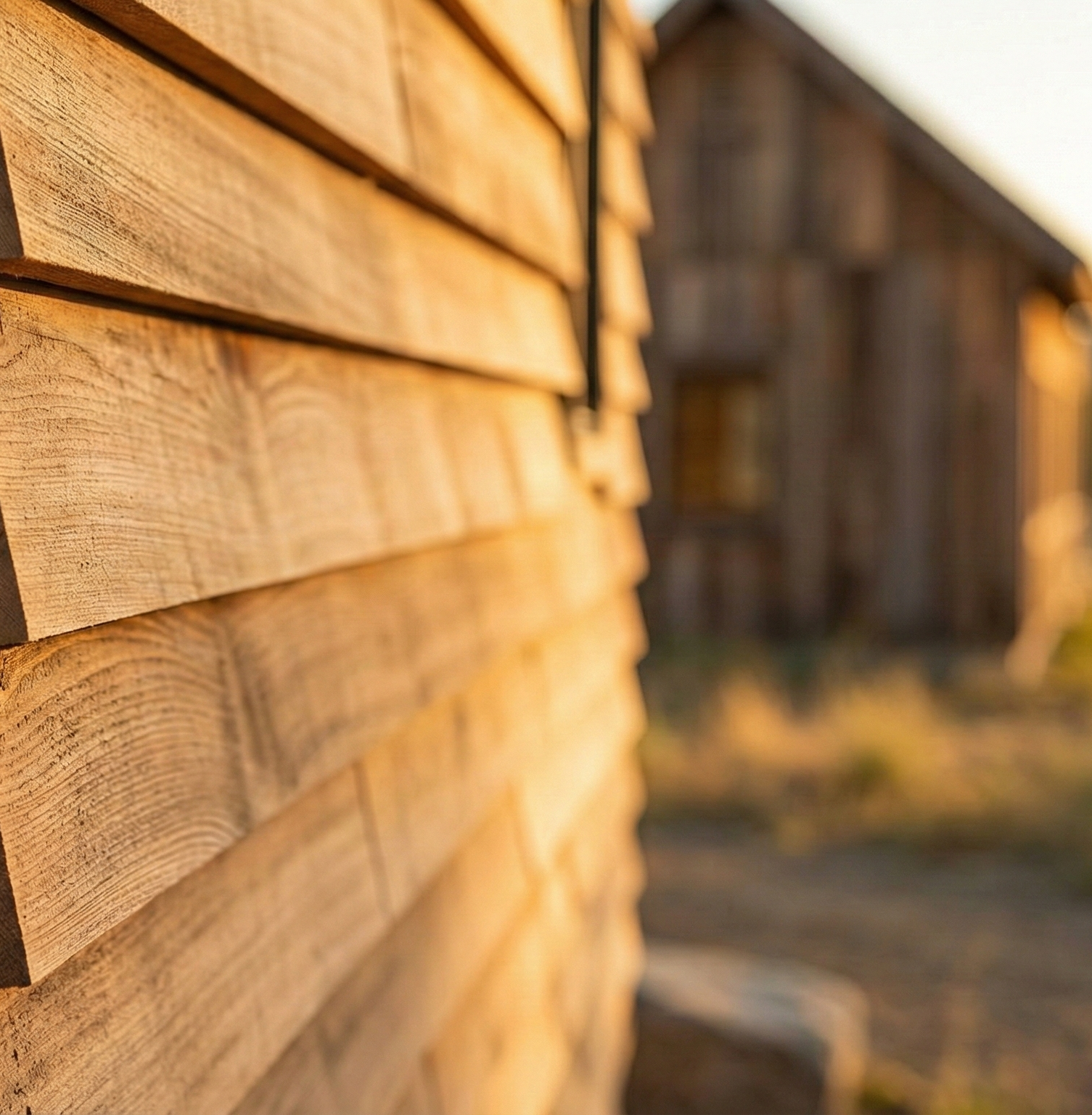
Plain Bevel (Clapboard)
The Traditional Wedge.
Sawn at an angle, this board is thick at the bottom edge and tapers to a thin top edge. It is installed horizontally, with each board overlapping the one below it.
The “Installer’s Friend”: Because there is no fixed locking mechanism (like a tongue), a carpenter can adjust the overlap slightly (e.g., from 1″ to 1.5″).
This allows them to adjust the coursing so the siding lines up perfectly with window and door tops without ripping narrow strips.
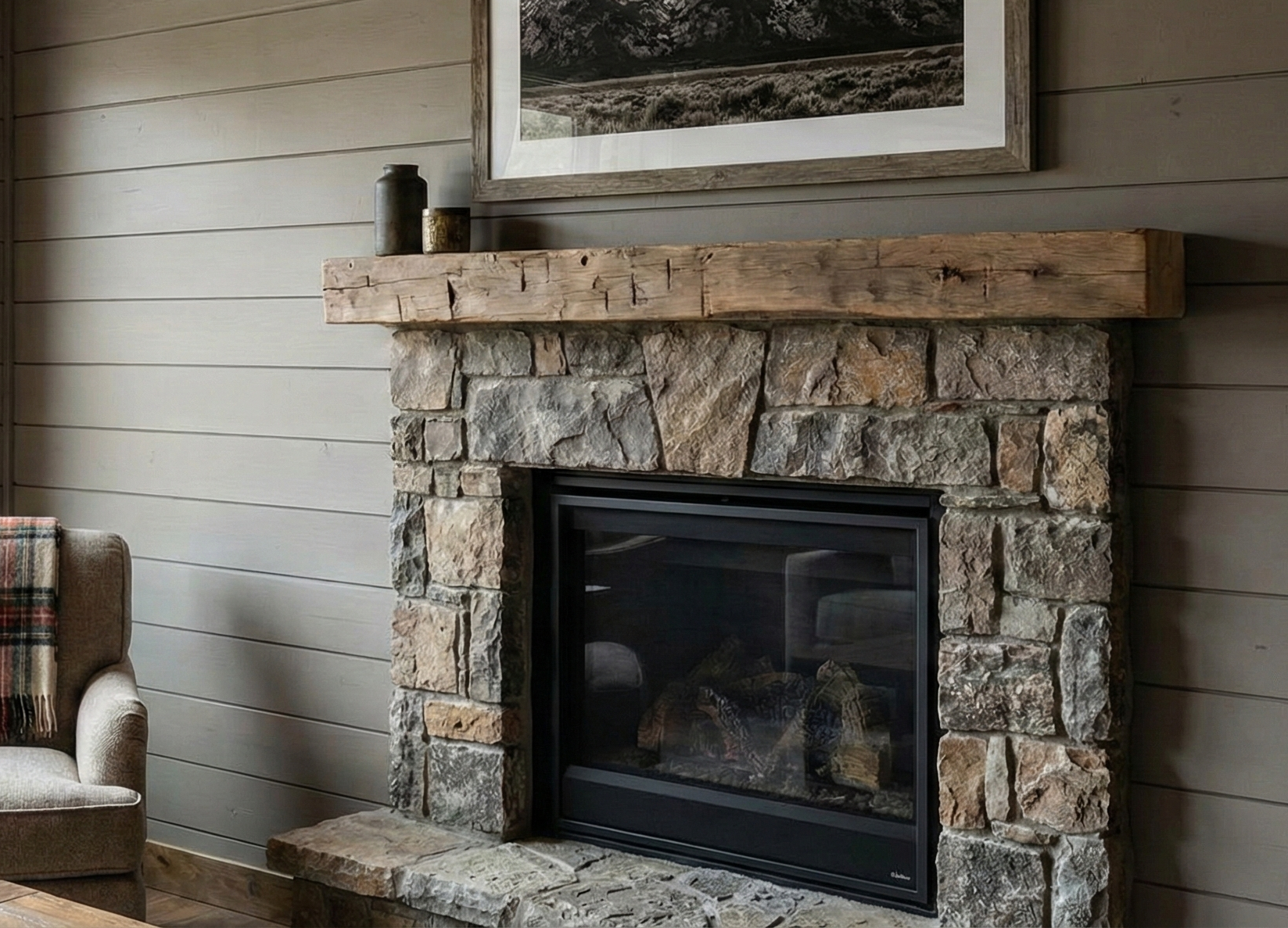
True Shiplap
The Watertight Overlap.
Often confused with “Nickel Gap,” true Shiplap refers to the joint itself. Opposite sides of the board are notched (rabbeted) so they fit flush on top of each other.
There is no tongue and no groove. The overlap creates a weather-tight seal while allowing the wood to expand and contract freely without buckling.
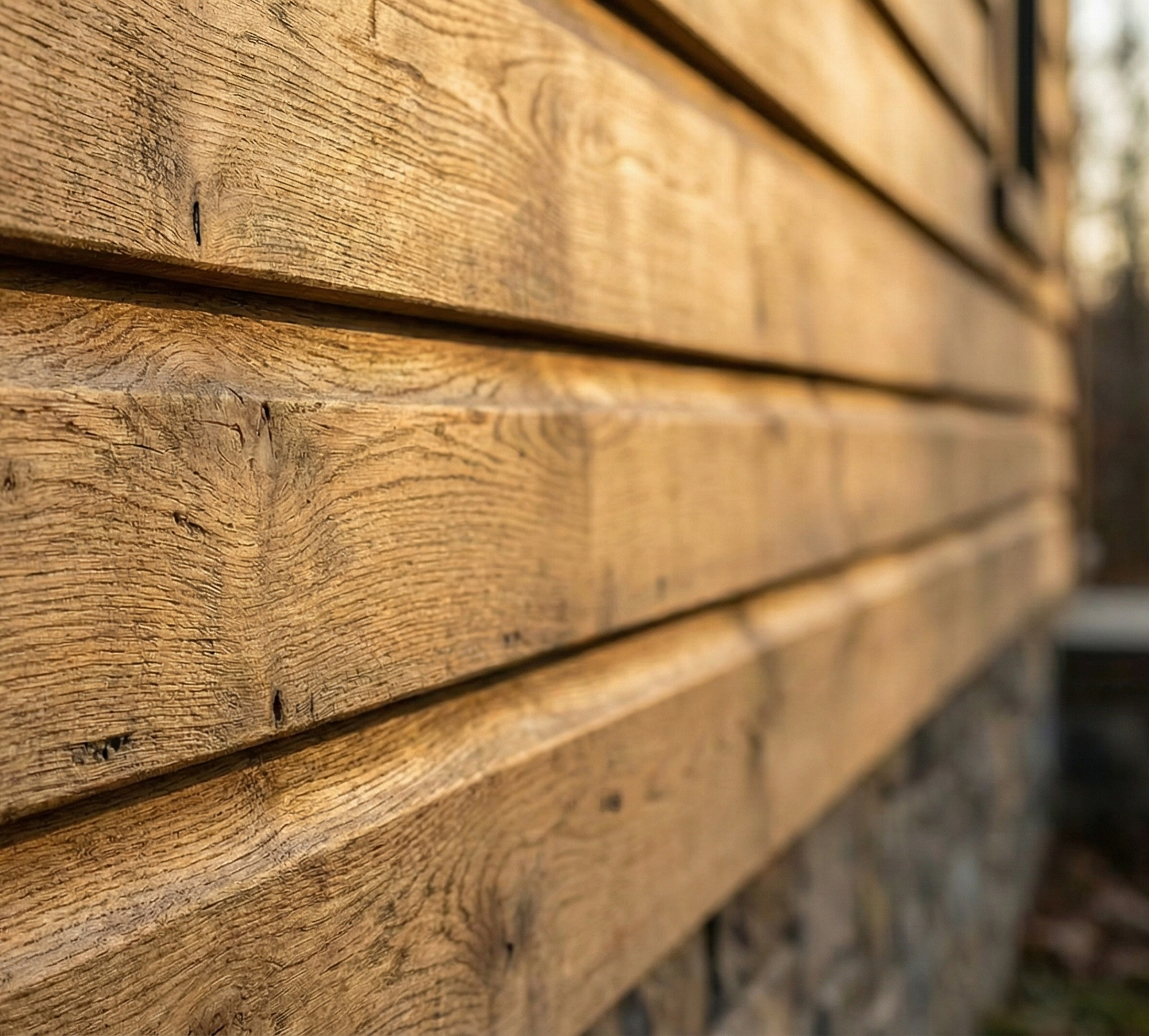
Dutch Lap (German Siding)
The Historic Profile.
A variation of drop siding with a curved or scooped profile at the top of the board. This was a standard pattern in early 20th-century homes across North Carolina.
We frequently match existing siding on historic renovations in Montreat, Biltmore Forest, and Asheville.
Ordering Tip: Calculate “Exposure,” Not Width
With overlap siding, a significant portion of the board is hidden by the piece above it.
Example: A “1×8 Channel Rustic” board is roughly 7-1/4″ wide, but it overlaps the previous board. Your actual Face Exposure (what you see) is typically only 6 inches.